---
✅ Meaning of Staffing
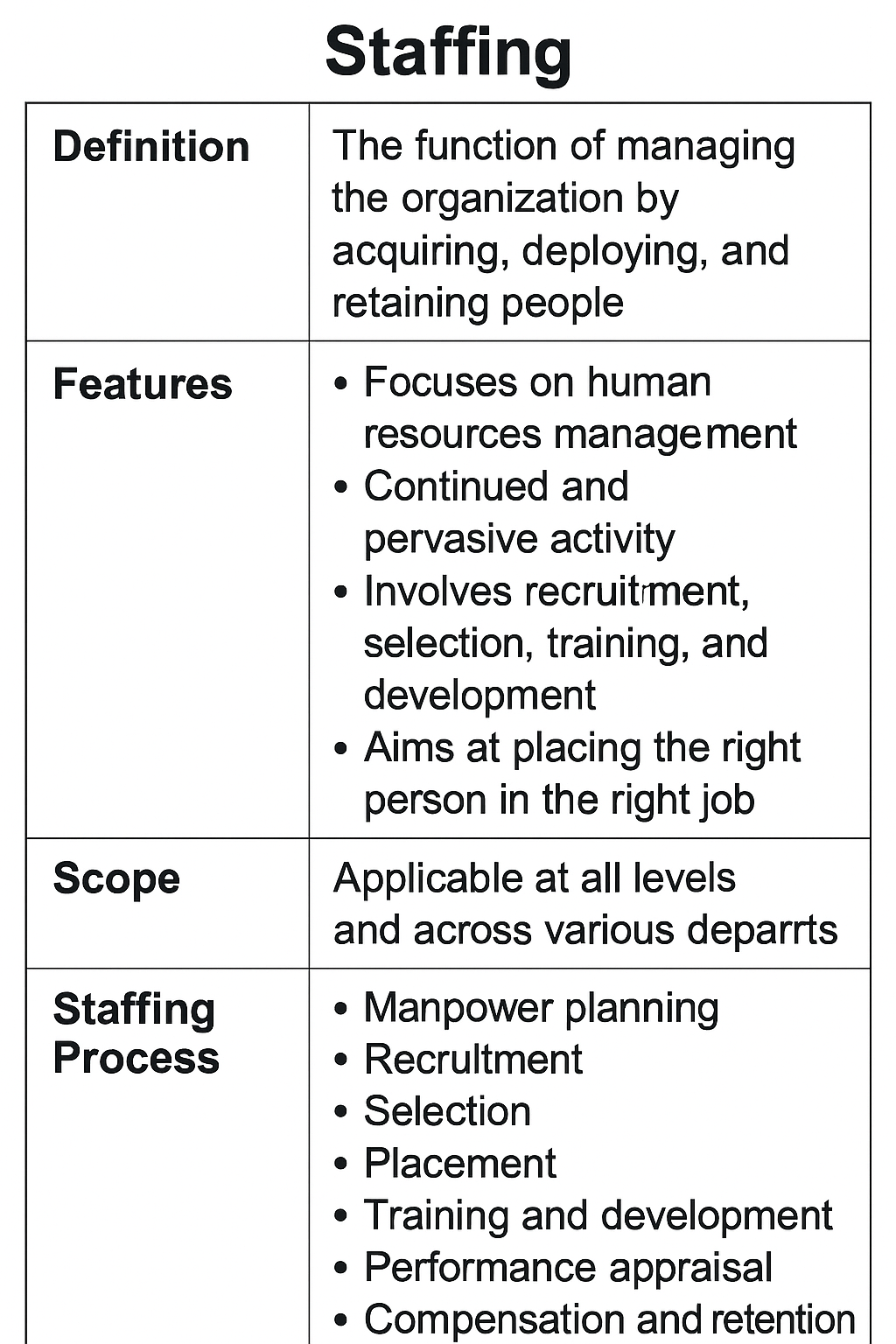
Staffing is one of the key functions of management. It refers to the process of recruiting, selecting, training, and developing employees to fill various positions in an organization. It ensures the right people are in the right jobs at the right time.
---
✅ Definition of Staffing
> Koontz and O’Donnell:
“Staffing is the managerial function of filling and keeping filled the positions in the organizational structure.”
> Theo Haimann:
“Staffing pertains to recruitment, selection, development, training, and compensation of subordinates.”
---
✅ Features of Staffing
1. Continuous Function
Staffing is not one-time; it's an ongoing activity.
2. Part of Human Resource Management
Involves manpower planning, recruitment, and development.
3. Goal-Oriented
Ensures optimal use of human resources for achieving organizational goals.
4. Concerned with People
Involves selecting and managing people at all levels.
5. Managerial Responsibility
Performed by all levels of management, especially HR and line managers.
6. Alignment with Strategy
Staffing must support the organization's strategic direction.
---
✅ Scope of Staffing
Manpower Planning
Job Analysis and Design
Recruitment and Selection
Orientation and Placement
Training and Development
Performance Appraisal
Promotion and Compensation
Succession Planning
---
✅ Chief Elements (Functions) of Staffing
1. Manpower Planning – Forecasting future HR needs.
2. Recruitment – Attracting suitable candidates.
3. Selection – Choosing the right person through testing and interviews.
4. Placement – Assigning the selected person to the right job.
5. Training – Enhancing employee knowledge and skills.
6. Development – Long-term growth and career advancement.
7. Appraisal – Evaluating employee performance.
8. Compensation – Fair payment and benefits.
9. Promotion and Transfers – Upward or lateral movement of employees.
---
✅ Process of Staffing (Step-by-Step)
Step Description
1. Manpower Planning Estimating the number and type of employees required.
2. Job Analysis Determining job requirements (job description + specification).
3. Recruitment Attracting candidates via ads, referrals, campus drives, etc.
4. Selection Screening, testing, interviews, and final appointment.
5. Placement Fitting the right candidate in the right role.
6. Orientation Introducing the new hire to the organization.
7. Training & Development Providing necessary skills and career growth opportunities.
8. Performance Appraisal Measuring job performance and giving feedback.
9. Promotion & Transfer Upgrading or reassigning based on performance.
--