✔ Concept of Financial Services
✔ Meaning and Definition
✔ Conceptual Framework
✔ Nature & Characteristics
✔ Scope of Financial Services
✔ Kinds / Types of Financial Services (Detailed)
This is perfect for MBA, B.Com, and other commerce subjects.
---
⭐ 1. CONCEPT OF FINANCIAL SERVICES
Financial services refer to all the economic services provided by the finance industry aimed at mobilizing savings, allocating funds, managing risks, and supporting financial transactions. These services enable individuals, businesses, and governments to acquire financial resources, invest wisely, manage risks, and facilitate smooth economic activities.
The financial services sector includes banks, insurance companies, NBFCs, mutual funds, stockbrokers, investment bankers, credit rating agencies, venture capital funds, leasing companies, and financial advisors.
Financial services act as a bridge between savers and borrowers and help in the growth of the economy by promoting investment, trade, and production.
---
⭐ 2. MEANING AND DEFINITION OF FINANCIAL SERVICES
✔ Meaning
Financial services are services provided by financial institutions to facilitate financial activities such as borrowing, lending, investing, insuring, and managing money.
✔ Definition
According to the Government of India:
"Financial services mean services rendered by financial institutions to facilitate financial transactions and processes such as mobilization of savings, allocation of funds, risk management, and investment services."
In simple terms:
? Financial services help people manage money—save, invest, borrow, insure, and transact.
---
⭐ 3. CONCEPTUAL FRAMEWORK OF FINANCIAL SERVICES
The conceptual framework shows how financial services operate within the financial system:
(a) Mobilization of Savings
Collecting savings from households through deposits, mutual funds, insurance premiums, etc.
(b) Transfer of Funds
Channels savings to productive sectors such as industries, real estate, agriculture.
(c) Risk Transformation
Converts individual risks into manageable risks through insurance, diversification, and hedging.
(d) Payment Mechanism
Enables smooth transactions through UPI, NEFT, credit cards, payment banks, digital wallets.
(e) Value Addition Services
Investment advisory
Portfolio management
Credit rating
Asset management
Merchant banking
(f) Regulatory Framework
Services operate under institutions like:
RBI
SEBI
IRDAI
PFRDA
Ministry of Finance
Thus, financial services act as the foundation of the financial system by enabling capital formation and economic growth.
---
⭐ 4. NATURE & CHARACTERISTICS OF FINANCIAL SERVICES
1. Intangibility
Financial services cannot be seen or touched; they are performance-based (e.g., insurance, investment advice).
2. Customer Oriented
Services are customized to meet customer needs—loans, insurance policies, investment portfolios.
3. Inseparability
Production and consumption occur simultaneously (e.g., financial advice is consumed instantly).
4. Perishability
Financial services cannot be stored; unused service capacity (like unused loan limits) cannot be saved.
5. Variability
Quality may differ across branches, advisors, and employees.
6. People-Based Services
Employees' skill, knowledge, and behavior strongly affect service quality.
7. Continuous Process
Financial services require continuous interaction—renewals, repayments, portfolio updates.
8. Regulation Based
Heavily regulated by RBI, SEBI, IRDAI to protect investors and maintain stability.
9. High Trust Requirement
Customers expect confidentiality, transparency, and security (especially in banking and investment).
---
⭐ 5. SCOPE OF FINANCIAL SERVICES
The scope of financial services is very wide because it covers both:
A. Fund-Based Services
(Services involving direct finance)
B. Non-Fund-Based Services
(Services involving advisory or facilitation)
Let us discuss both.
---
⭐ A. FUND-BASED FINANCIAL SERVICES
These involve deployment of funds and earning returns from investments or lending.
1. Loans and Advances
Banks and NBFCs provide personal loans, home loans, car loans, etc.
2. Leasing and Hire Purchase
Companies provide assets such as machinery, vehicles, equipment on lease.
3. Factoring and Forfaiting
Financial institutions purchase receivables from companies and provide immediate cash.
4. Mutual Funds
Investment pooling where investors invest in diversified portfolios.
5. Venture Capital
Financing high-growth start-ups and innovative businesses.
6. Housing Finance
Housing finance companies (HDFC, LIC Housing) provide long-term housing loans.
---
⭐ B. NON-FUND-BASED FINANCIAL SERVICES
These provide support, advisory, and facilitation services.
1. Merchant Banking
Helps companies raise capital through IPOs, FPOs, rights issues, bond issues.
2. Credit Rating
Agencies like CRISIL, ICRA rate companies and securities based on creditworthiness.
3. Investment Advisory
Providing professional financial planning and investment guidance.
4. Portfolio Management Services (PMS)
Managing investments on behalf of high-net-worth individuals.
5. Insurance Services
Life and general insurance for risk protection.
6. Stockbroking
Providing trading services in shares, derivatives, commodities, currencies.
7. Depository Services
Demat accounts for holding securities in electronic form.
8. Financial Consultancy
Advising companies on mergers, acquisitions, restructuring.
---
⭐ 6. KINDS / TYPES OF FINANCIAL SERVICES (DETAILED)
Below is a comprehensive list with explanations.
---
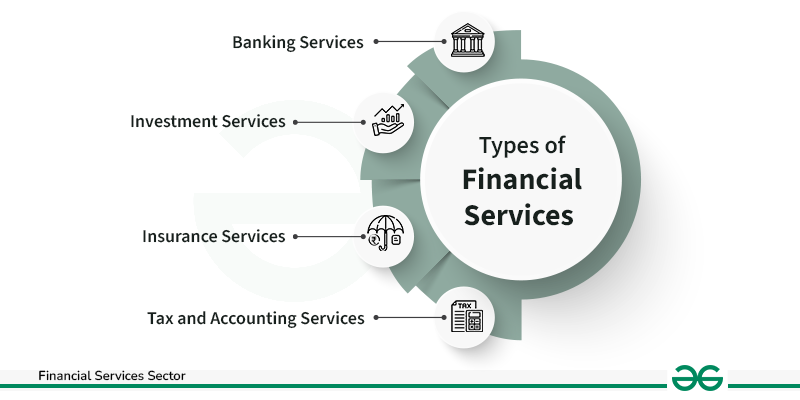
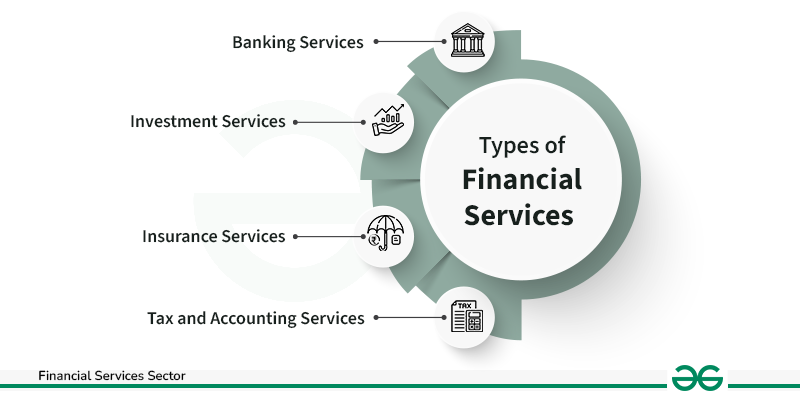
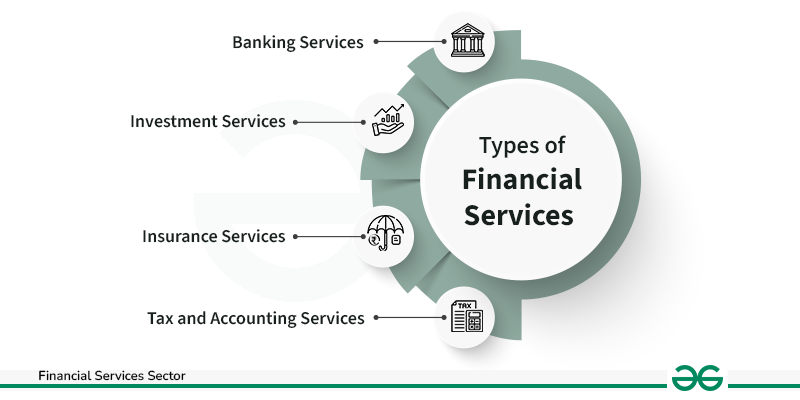
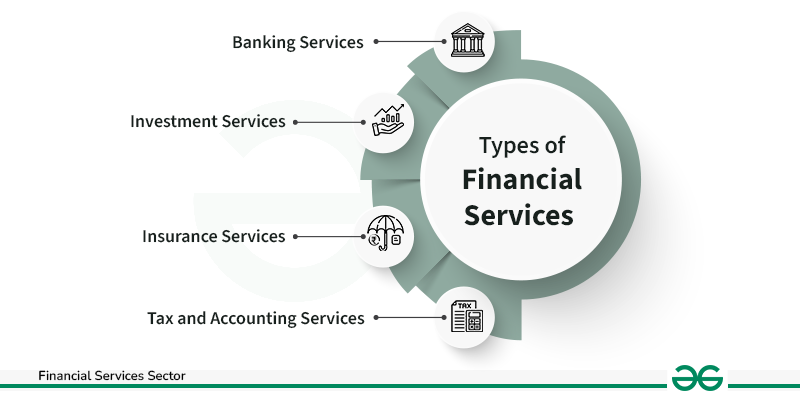
1. Banking Services
Includes deposit accounts, loans, digital payments, credit cards, remittances.
Example: SBI providing savings accounts, loans, and mobile banking.
---
2. Insurance Services
Protect customers from financial losses.
Types:
Life Insurance
Health Insurance
Motor Insurance
Property Insurance
---
3. Capital Market Services
Includes share trading, IPOs, mutual funds, bonds, derivatives.
Example: Zerodha providing trading services.
---
4. Merchant Banking
Helps companies raise funds through public issues of shares and debentures.
Example: A merchant banker manages an IPO for a company.
---
5. Venture Capital & Private Equity
Provides funding to start-ups or high-growth companies.
Example: Sequoia Capital investing in Zomato.
---
6. Leasing & Hire Purchase
Use of assets without ownership.
Example: A company leasing machinery for 3 years.
---
7. Credit Rating Services
Evaluating creditworthiness of companies and bonds.
Example: CRISIL rating a company’s debt instrument.
---
8. Factoring and Forfaiting
Purchasing a company’s receivables for immediate cash.
Example: A manufacturing firm selling invoices to a factoring company.
---
9. Mutual Funds
Investment pooling managed by professional fund managers.
Example: SBI Mutual Fund.
---
10. Asset Management
Managing portfolios for institutions and wealthy individuals.
---
11. Stock Broking
Facilitating buying and selling of securities.
---
12. Financial Advisory & Consultancy
Corporate restructuring, taxation, mergers, acquisitions.
---
⭐ CONCLUSION
Financial services form the backbone of modern economies.
They:
✔ mobilize savings
✔ promote investment
✔ facilitate smooth financial transactions
✔ manage risks
✔ support industrial and economic growth
The scope of financial services is extremely wide, covering everything from banking and insurance to investment management, venture capital, advisory services, and capital market operations.